LS 5603/20-21 LITERATURE FOR CHILDREN AND YOUNG ADULTS

For fun tidbits, book reviews and other required assignments

Thursday, April 21, 2011

Poetry Paws--Module Six

BIBLIOGRAPHY
Janeczko, Paul B. 2007. Hey, You!: Poems to Skyscrapers, Mosquitoes, and Other Fun Things. Ill. by Robert Rayevsky. New York: HarperCollins Publishers. ISBN-13: 978-0-06-052347-3.

SUMMARY
An anthology suited for children ages 4-8. Janeczko cleverly selected poems that are written about things...living and not.


CRITICAL ANALYSIS
This book is a record of poetry that creatively displays conversations between the authors and their object of choice. For example, some poems are written to farms, mosquitoes, skyscrapers, etc. This book would appeal to the elementary age group for it's silliness, it's frankness, and variety. The poems are easy to understand but are not overly simplistic. Listed below is one of the poems that would most certainly appeal to children that marvel silliness and things that are gross in nature.

To A Maggot in an Apple
Richard Edwards

You lie there like a baby,
Frail and soft and curled,
I'm sorry that I broke in
To your safe white world.
I really didn't mean to,
Just blame my appetite
For laying bare your cradle
And letting in the light.
One question then I'll leave you
To slumber in the bin--
I'm feeling rather queasy,
Er...did you have a twin?


Introduction/Extension: A fun way to introduce this book is to have someone read aloud one of their favorite poems from the book, then allow the children to separate into small groups, read, select their favorite poems, and create a mini-mural of those poems. In addition, the children can write a poem about an object of their choice.


BIBLIOGRAPHY
Hill, Laban Carrick. 2010. Dave the Potter: Artist, Poet, Slave. Ill. by Bryan Collier. New York: Little, Brown Books for Young Readers. ISBN-13: 978-0316107310.

SUMMARY
A book of poetry and historical facts for children ages 4-8. This is a historical depiction of the life of Dave the Potter, an extraordinary artist, poet, and potter from the 1800s.


CRITICAL ANALYSIS
This book is filled with outstanding pictures that beautifully illustrates the livelihood of Dave the potter, poet, and artist. It takes the reader on the journey of making a pot with Dave from dirt to the carving of the final touches of poetry onto the pottery--which was a signature trademark of the artist. This book will enlighten the reader of the accomplishments of someone under the oppressive circumstance of slavery. It will motivate the reader that they can do anything under any circumstance if they are determined to do so. Hill's poetry is simple and informative of Dave's work in the beginning of the book. Towards the end, the actual work is shown and the poetry carvings (mistakes and all) are further explored and explained to the reader. This book also received the distinctive Caldecott Honor book recognition of 2011.

On wet days,
heavy with rainwater,
it is cool and squishy,
mud pie heaven.
But to Dave
it was clay,
the plain and basic stuff
upon which he learned to
form a life
as a slave nearly
two hundred years ago.

(an actual poem carved by Dave)
Dave belongs to Mr. Miles/
wher the oven bakes & the pot biles ///--July 31, 1840


Introduction/Extension: A great way to introduce this book is to read it aloud to the group and explore the websites that the author listed within the book--this will help the reader know more about Dave, e.g.:
An educator's guide to Dave--www.digitaltraditions.net/html/D_Resources.cfm. Also, schedule a visit to see or invite a local potter to demonstrate the making of pottery will further involve the students in the art of pottery.

Thursday, April 7, 2011

Poetry Paws--Module Five

BIBLIOGRAPHY
Sidman, Joyce. 2006. Meow Ruff: A Story in Concrete Poetry. Ill. by Michelle Berg. Massachusetts: Houghton Mifflin Books for Children. ISBN-13: 978-0618448944.

SUMMARY
A concrete poetry book that is suited for children ages 4-8. Thirty-two pages of colorful illustrations and creative poem structure--this book can appeal to the younger age group as well as provide entertainment to the adult reader whilst the child is being read to.

CRITICAL ANALYSIS

I enjoyed this book because of the creative way the poet used the elements of concrete (or shape) poetry to further express herself. On one hand, the story of the dog and cat adventure can entertain and engage the younger child and it can seem as if it is the only story of the book...until you begin to read the poetry within the sidewalk of the book. That is when one realizes that the story has more to it than meets the eye. The poetry comes from the background illustrations (e.g., the sidewalk, the clouds, the grass, etc.) This little surprise of hidden concrete poetry, when pointed out to the child, will make the book even more enjoyable. I found myself fully engaged and searching for the next concrete poem and delighting in how the poet creatively shaped the poems within the scenes.

Excerpt
Click to enlarge


Introduction/Extension: A fun way to introduce this book is to use similar looking dog and cat puppets to engage the young audience. The teacher or leader of the story time can also share his or her feelings about the book initially and encourage the children to share their likes and dislikes of the book.


BIBLIOGRAPHY
Myers, Walter Dean. 2008. Jazz. Ill. by Christopher Myers. New York: Holiday House. ISBN-13: 978-0823421732

SUMMARY
A great book that is intended for the young adult. This book introduces the audience to Jazz and the New Orleans culture. Native New Orleans will enjoy the presentation of their local  traditions and ceremony displayed within.

CRITICAL ANALYSIS
Myers did a fine job writing this book with a mix of long and short phrasing throughout. Some of the poetry, when read aloud, sounds like a blues/jazz song--which probably was the writer's intent. The use of short and choppy phrases bode well with mimicking syncopation and other musical elements. On the same note, long phrasing was also used to mimic long-winded singing or a legato feel. This book will appeal to natives of Louisiana or lovers of the New Orleans alike. The illustrations are colorful fluid paintings--completed by the son, Christopher Myers--that help the reader with the imagery of seeing the culture that the poet is trying to share.
Excerpt of Good-Bye To Old Bob Johnson
click to enlarge

Introduction/Extension: A good way to introduce this book is to use either an actual musician (e.g., a trumpeter) or a Jazz enthusiast to help present this book and the Jazz genre. Inviting someone from New Orleans as a guest speaker would be great also to further explore the New Orleans lifestyle.


BIBLIOGRAPHY
Fleischman, Paul. 2008. Big Talk: Poems for Four Voices. Ill. by Beppe Giacobbe. Massachusetts: Candlewick. ISBN-13: 978-0763638054.

SUMMARY
A clever, color-coded book of juvenile poetry for two or more readers to participate in choral reading.

CRITICAL ANALYSIS
This book is crazy and fun to perform. I actually did it with another person--so a total of two people. I giggled the whole way through. If I found it humorous, I'm sure this book will also amuse children--especially if done with friends or classmates. The way the author wrote the poetry resembles four-part sheet music. The poetry used is easy then becomes progressively harder. There are three different poems in all. At the beginning of the book, the author explains how to read the book and suggests tips to follow to successfully read the book.

Excerpt
click to enlarge
          

Introduction/Extension:
One way to introduce this book is to provide an enthusiastic group of individuals to perform the activities in front of the class (preferably people that are not shy). An excellent extension is to expose the readers to four-part choral sheet music and encourage structuring previously written poetry into poems for two to four voices. Later, a presentation of the project can be presented to the class. 


This is a poetry evaluation for LS 5663 Poetry For Children and Young Adults--a class at Texas Woman's University (TWU).

Thursday, March 24, 2011

Poetry Paws--Module Four


BIBLIOGRAPHY
Rogasky, Barbara. 2001. Leaf by leaf: autumn poems. Ill. by Mark Tauss. New York: Scholastic Press. ISBN-13: 978-0590253475.

SUMMARY
Leaf by leaf, a anthology of 25 poems and excerpts about the autumn season. This book is for reading grade levels 4-8.

CRITICAL ANALYSIS

The mood of this book is complex. Some of the poetry is very intelligently written and evokes emotions of peace, love of natural beauty, and sadness. This book has potential appeal to older youth groups to adult. Each poem fills the mind with imagery of realism of the things that happen in the autumn season--from bike-riding, the chore of leave removal, and the unfolding of the earth's natural changes. The beautiful photography lends tremendous support to the text and aids the reader in further visualizing the scenically described poetry of the country as well as the city during autumn. The author celebrates the oncoming of autumn, the loss of summer, and the anticipation of winter through several collected poems.

wild weather

Winter is coming! The wind that blows
Hard from the north, from the land of snows,
Nips the fingers and reddens the nose,
Whips the branches and tugs the clothes
     And strips the tree,
Till nothing is left of her yellow attire;
And hoar frost streaks the choclatey mire,
And crows string like crotchets along the wire,
And wanderers think of home and fire,
     And so do we. 
                        --Shirley Hughes


INTRODUCTION/EXTENSION

This book is can be implemented into the science curriculum as supplementary poetry reading to introduce different poetry styles that celebrate the autumn season.To further engage the student, each student can take pictures of whatever interests them about their favorite season of the year and either write poetry about the picture or collect poetry that best describes the pictures taken. A collage of pictures and poetry can then be displayed in the classroom poetry corner or in a specified poetry corner of the school library.


BIBLIOGRAPHY
David Roessel and Arnold Rampersad. Poetry for Young People: Hughes, Langston. 2006. Ill. by Benny Andrews. New York: Sterling Publishing Co., Inc. ISBN-13: 978-1402718458.

SUMMARY
A book of some of Langston Hughes poetry for young people, typically of ages 9-12. This book introduces the reader to a range of topics: from the social life of the African American during a time of oppression to the musical appreciation of jazz. 

CRITICAL ANALYSIS
This collection of poetry by Langston Hughes is displayed with actual reflections and comments from the poet's life--such things and events that inspired the poem in some way. The book starts with an overview of Langston Hughes biography and with each poem displayed is a life reference from or about Langston Hughes. This element of the book made the poetry come alive in a different way--it gave a better understanding of the poet's perspective. Many a reader will find great appeal in the incorporation of dialect, musical rhythm of jazz/spirituals, and the love of the African American culture that is a specifically unique writing style of Hughes.

The Weary Blues
(excerpt)

Droning a drowsy syncopated tune,
Rocking back and forth to a mellow croon,
        I heard a Negro play...
In a deep song voice with a melancholy tone
I heard that Negro sing, that old piano moan---
        "Ain't got nobody in all this world,
             Ain't got nobody but ma self.
             I's gwine to quit ma frownin'
             And put ma troubles on the shelf."


INTRODUCTION/EXTENSION

This book can be an excellent addition to the study of African American social studies as well as supplementary biography about the great poet, Langston Hughes. There are many avenues that can be celebrated and explored with this book. Students can be reminded of the life and times of the 1920s for the African American people. Each child can pick their favorite poem from the book and share it with the class--all the while dressed in costume, mimicking someone that they admired during that time period. A small party with displays of things significant to the 1920s can be displayed throughout the class or library with music of that time also played in the background.

Monday, March 7, 2011

Poetry Paws--Module Three

BIBLIOGRAPHY
Grandits, John. 2004. Technically, It's Not My Fault. Ill. by John Grandits. New York: Houghton Mifflin Co. ISBN-13: 978-0-618-42833-5.

SUMMARY
This book of concrete poetry is packed full of imaginative poems that will entertain smart-alecks of all ages. There are 28 poems total with each written with the main character, Robert, as the narrator and driver of each poem. 

CRITICAL ANALYSIS
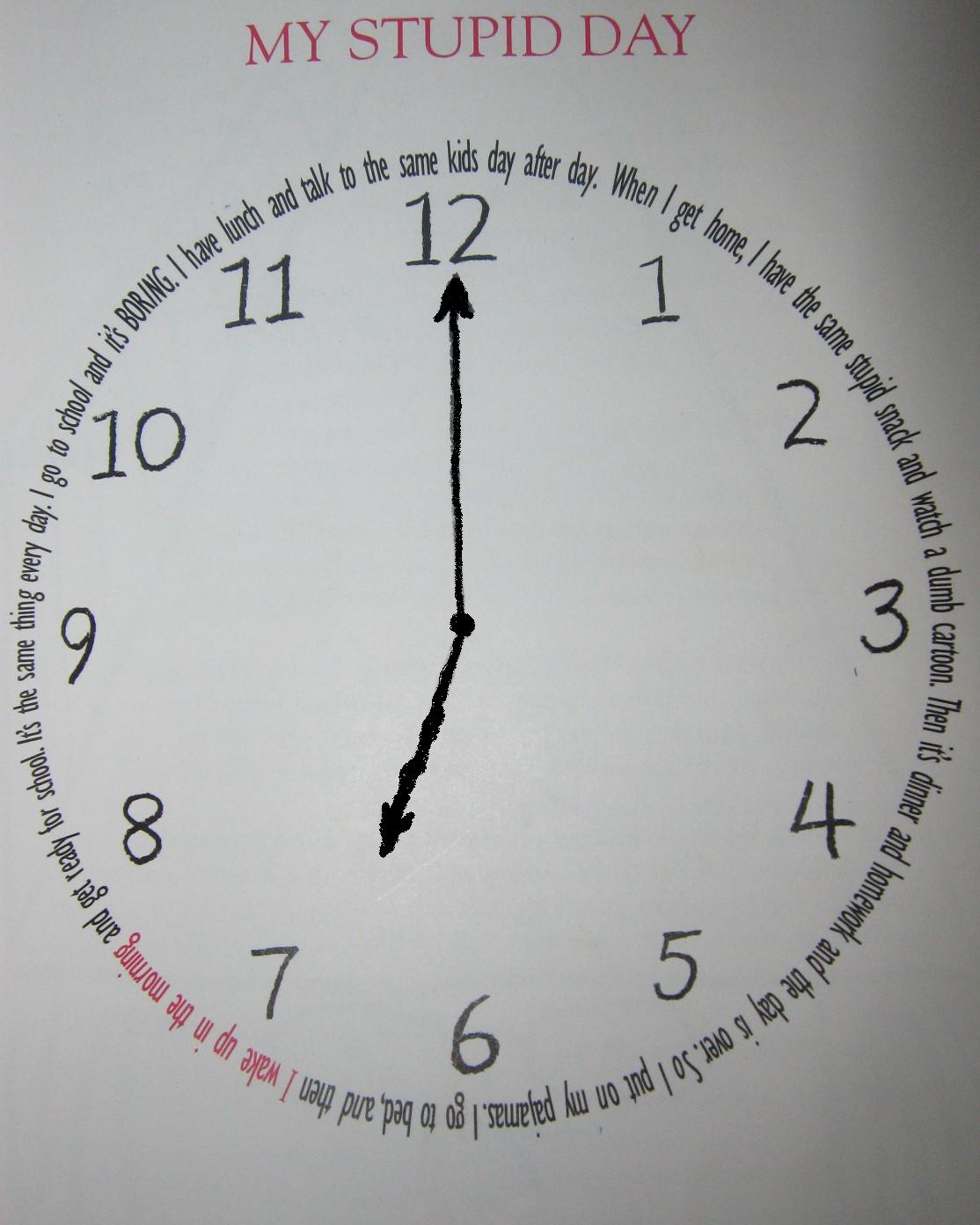
My first thought about the layout, illustrations, and poem structures was...COOL! This book provides the reader with excellent examples of multiple possibilities of concrete (shape) poem structure. Red, black, and white illustrations lend direction to how the poetry should be read from start to finish. This book has great potential to appeal to the misunderstood geniuses out there in the world. The main character is a boy--expressing his thoughts and antics--from sibling rivalry to challenging adult authority, to which will definitely appeal to boys alike. All children of school age, no matter the gender, can appreciate the commonalities expressed within the poetry of this book. My Stupid Day is one of those gender neutral poems that can appeal to both sexes--as well as all ages. It completely exemplifies the typical rut that we all find ourselves stuck in on a daily basis. This poem would be great when read aloud about three to four times to feel the full effect of the rut. :-)
For a closer view, click pic to enlarge


Introduction: This book is hilarious and would be a great book of concrete poetry to introduce to older school age children--to encourage a love for poetry.

Extension: Have children draw a picture of a favorite toy, item, or symbol that reflects something significant in their past or present. Then, have them construct their own shape poem within their drawing. Expose the children to about two additional concrete poetry books from different authors to compare different styles.


BIBLIOGRAPHY
Hauth, Katherine B. 2011. What's for Dinner?: Quirky, Squirmy Poems from the Animal World. Ill. by David Clark. Massachusetts: Charlesbridge Publishing, Inc. ISBN-13: 978-1570914713.


Thursday, February 17, 2011

Poetry Paws--Module Two

BIBLIOGRAPHY
Lewis, J. Patrick. 2005. Please Bury Me in the Library. Ill. by Kyle M. Stone. Florida: Gulliver Books Harcourt, Inc. ISBN-13: 978-0152163877.

SUMMARY
This book of poetry is a homage to reading, literacy, libraries, and many things associated. Sixteen poems in all are listed within this book. The intended audience is children between the ages of six to nine. 

CRITICAL ANALYSIS
After reading this book, I could see the goal of the poet was to inspire and encourage readers to utilize libraries as well as foster the love of reading. The poems were well constructed and intelligently written. When read aloud by an animated adult or teacher, the humor within may appeal to some children. The illustrations supported the poems with bold and colorful expressions of acrylic paint. Lewis' phrasing and word choice is creatively constructed and lends well to sparking the reader's imagination. Many of the poems cleverly promote books of old and illuminates the characteristics of a good or bad book. Case in point,  see the poem What If Books Had Different Names? listed below.

What If Books Had Different Names?
(excerpt)
What if books had different names
Like Alice in...Underland?
Furious George,
Goodnight Noon,
Babar the Beaver

Introduction: this book would be great to introduce at the elementary level to promote library use and begin the child's reading journey. It can be read prior to visiting the library at the beginning of the semester.

Extension: Children can be asked to name one or two of their favorites book of poems or books that they are reminded of when they hear this book. A day can be designated to allow the children to bring their favorite book from home.

BIBLIOGRAPHY
Mora, Pat. 2007. Yum! MmMm! Que rico! Americas' Sproutings. Ill. by Rafael Lopez. New York: Lee and Low Books Inc. ISBN-13: 978-1584302711.

SUMMARY
This is a great book of poetry that celebrates the different foods that are grown in the Americas. Written in haiku style and packed full of food and fun facts for each one.

CRITICAL ANALYSIS
This is a colorfully illustrated, culturally-enriched book of haiku style poetry. This books seems to be intended for the Hispanic American culture to promote the love of food and its origins. For exploring Hispanic American heritage, this book will appeal to any reader with that particular interest or curiosity of another culture. Parents, children, and teachers alike can enjoy this book for the whimsical illustrations, the haiku itself, and the informative backstory of each food highlighted within. This is a excellent book to familiarize students to the haiku...with a multicultural twist. Mora uses simple traditionally known foods as her subject matter and artistically introduces the reader to edible world around us...all the while, celebrating family heritage, togetherness, and the seasonal environment.

Pecan
We crack hard, brown shells,
family munching, story time,
crunchy taste of fall.

Introduction: this book would be great to introduce at the elementary level to promote agriculture and healthy eating. The haiku can be read aloud by individual students while the teacher reads the individual foods background information and facts.


Extension: Children can be asked to bring in a favorite naturally grown food that is listed within the book. The food brought in can be placed on a food pyramid display. The teacher or instructor can explore the United States Department of Agriculture with the children and allow time for computer playtime for interaction on the MyPyramid Blastoff computer game--which can be found on MyPyramid.gov website.      


BIBLIOGRAPHY
Florian, Douglas. 2006. Handsprings. Ill. by Douglas Florian. China: Greenwillow Books. ISBN-13: 978-0060092801.

SUMMARY
This book of poetry celebrates the seasonal change from Winter to Spring. From food, to games, spring-cleaning chores, and weather...all things that one can imagine that relates to Spring is written into multiple
inventive poetry formats.  

CRITICAL ANALYSIS
This book has great quality and appeal for all lovers of Spring (like myself). Its sing-song rhythm and rhyme sounds wonderful read-aloud. The reader can envision the activities of spring through these poems. Florian expressed some of his poetry outstandingly through pattern and through his own watercolor paintings. One in particular was especially creative and delightful. The pattern mimicked the subject matter of the poem...rain.

Rain Reign (excerpt)
E    E      W     F
a     a       e      a
c     c               s
h     h        h      t
                 u
t      t         r      i
i      i          r     n
m    m        y,    d
e     e                o
                  s     o
i      i          c      r
t      t          u     s.
                  r
r      p         r
a      o         y
i       u
n       r
s       s

Introduction: this book would be great to introduce at the elementary level at the end of winter and for the approaching Spring season. It can be read aloud as a group or several students can read one aloud individually.


Extension: Children can be asked to name one or two of their favorites things that they enjoy about Spring. A collage of materials from nature (e.g., flowers), pictures, magazine clippings can be constructed into a book per child. In addition, each child can write a poem to explain their feelings about Spring and their collage.

This is a poetry evaluation for LS 5663 Poetry For Children and Young Adults--a class at Texas Woman's University (TWU).

Thursday, February 3, 2011

Poetry Paws

BIBLIOGRAPHY
Hopkins, Lee Bennett. 2005. Oh, No! Where Are My Pants? and Other Disasters: Poems. Ill. by Wolf Erlbruch. New York: HarperCollins Children's Books. ISBN-13: 978-0-688-17860-4

SUMMARY
This anthology of poetry edited by Hopkins is a well organized compilation of quirky poetry about childhood fears, mishaps, and disasters in life. The poetry listed within this book ranges from first-day-of-school issues to biting the worm in an apple.

CRITICAL ANALYSIS

Right away I could see the appeal of this anthology. Many of the poems within relate to familiar childhood experiences. The language of the poetry is very easily understood and invokes images that pulls at the reader's imagination of hypothetical situations. The first poem in the anthology stands out that illustrates both aforementioned appeals--which is cleverly named First Day written by Susan Hart Lindquist. It is a great example of a familiar childhood experience. Short and sweet and to the point...with a little rhyming thrown in.


FIRST DAY


This isn't the way
it was supposed to be-

                                                                You


                                                                           in

                                                                                    Room Two.

                                                                  Me

                                                                            in
                                                                                     Room Three.


The quality of the poem is evident by the way few words are used but it speaks volumes of a classic childhood situation--being moved from your best friend...the following school year. Any child can relate to the horrid surprise and spoiled plan of being in the same classroom/homeroom of your most closet pal. The separation and the alignment of the words You and Me mirrors the situation at hand. The illustration of two little girls separated, yet in adjacent rooms, further supports the poem. I immediately smiled in agreement after reading this poem because it brought back memories of my childhood as well...it struck the Oh No! chord of emotion.
This poem can be introduced appropriately on the first day of school. A great way to start the year and offset the anxiety of losing a friend to another classroom. Teachers can further plan an extension that can involve the students by having them write poems dedicated to their lost friends either lost to a class or to another school altogether.


BIBLIOGRAPHY
Prelutsky, Jack. 2006. What A Day It Was At School! Ill. by Doug Cushman. New York: Green Willow Books. ISBN-13: 978-0-06-082335-1

SUMMARY
This book of poetry is filled with laugh-out-loud humorous poetry. The main character of the book is a young school-age cat who has written a journal of sorts of about his day at school.

CRITICAL ANALYSIS
The author and illustrator cleverly begin the book of poems with a journal table of contents--listing all of the poems to follow by page number. The quality and appeal of this book are expressed in multiple ways. Every poem written reflects an event that has happened and will happen to a child in school. For example, the experience of not studying well for a test, to carrying an extremely heavy backpack, or the occasional trip to the library. The quality and craftiness was especially noted in the following poem. Prelutsky uses misspelled words within the poem to entertain the reader and promote the need to study for tests instead of doing everything but study. Any kid or adult (like myself) would get a kick out of seeing the horribly misspelled words...which many of us can attest to committing.

I WISH I'D STUDIED HARRDER 
(excerpt)
I wish I'd studied harrder
For our spellink test today.
I'm sorrie that I didn't,
Now I'm feeling some dismaye.
I'd like to get a passing graid,
But don't beleeve I will--
I think I got Whyoming wrong,
And Chyna, and Brazill.

This book can be used throughout the year to promote poetry reading. Students can experience an extension by picking out their favorite poem of the book and matching it with an actual event in their lives. Each student can read their favorite poem aloud or a choral reading can be an alternative depending on the confidence of the students.

Wednesday, May 5, 2010

Review of Contemporary Realistic Fiction and Fantasy books

BIBLIOGRAPHY
Gaiman, Neil. 2008. The Graveyard Book. Narrated by: Neil Gaiman. Holland: Midwest Tape, LLC. ISBN 978-0-0615-5189-5

PLOT SUMMARY
This story is about an abandoned baby boy and his rearing by ghosts within a graveyard. The child is left alone in the world due to the death of his family. The child, Nobody Owens, grows up with spiritual abilities afforded him by the spirit world. Nobody's adventures, within this tale, venture back and forth between the realms of the living and the dead.

CRITICAL ANALYSIS
Evaluation of the audio adaptation elements
*Format: 7 compact discs; vinyl audio CD case packaging.
*Unabridged recording.
*Reader: single narrator, adult, author of the book, and male.
*Sound quality: clear pronunciation, acceptable volume, no static.
*Background effects: musical.
*The reading: the narrator used multiple voices to differentiate multiple characters--often switching from a Scottish to British dialect and from male to female.
*The front and back matter: At the beginning of the tape is a brief introductory of the recording company, the author, the narrator, the original publisher, musical prelude, and the title of the story. Thereafter, the story starts immediately after the statement of the chapter title. At the end of the audio book, a brief authorial biography is stated as well as the publication data and the publishers' web address.
Listening experience: Overall, the listening experience was a great. I loved this story of fantasy. I never heard of a living child being raised by ghosts in a graveyard type concept before. The plot is definitely interesting and creative enough to keep the reader engaged. Readers of the macabre will also enjoy this dark suspense-comedy of sorts. The reader will care about the main character, Nobody Owens, as he grows up in the presence of ghosts and as they follow the suspense about Nobody's family history/tragedy. The description of the graveyard setting is very vivid and is (of course) an integral part of the story. The theme of good triumphing over evil is definitely clear but it shows a sacrifice of friendship over the choices made--between Nobody and his friend Scarlett--which mirrors some of real life conflicts over lost friendships, etc. due to the choices we make. The style consistently engages the reader to believe in the fantasy world, as well as the author's animated vocal framework. Lovers of Harry Potter, and the like, will also enjoy this dark fantasy.

REVIEW EXCERPT(S)
SCHOOL LIBRARY JOURNAL review: “Among a multigenerational cast of characters from different historical periods that includes matronly Mistress Owens; ancient Roman Caius Pompeius; an opinionated young witch; a melodramatic hack poet; and Bod's beloved mentor and guardian, Silas, who is neither living nor dead and has secrets of his own. Aside from these small flaws, however, Gaiman has created a rich, surprising, and sometimes disturbing tale of dreams, ghouls, murderers, trickery, and family.”
KIRKUS Review: “Wistful, witty, wise—and creepy. This needs to be read by anyone who is or has ever been a child.”

CONNECTIONS
Gaiman, Neil. The Neil Gaiman Audio Collection [Unabridged](Audio CD). ISBN 0060732989
Gaiman, Neil. Coraline: The Graphic Novel. Illustrated by Craig Russell. ISBN 0060825456

Awards
Newbery Medal
Boston Globe-Horn Book Award Honor Book
Hugo Award
Locus Award
Best Indie Young Adult Buzz Book
Audiobook of the Year
ALA Notable Children’s Book
ALA Best Book for Young Adults
ALA Booklist Editors’ Choice
Horn Book Fanfare
Kirkus Reviews Best Children’s Book
Time Magazine Top Ten Fiction
Cooperative Children’s Book Center Choice
New York Public Library’s 100 Titles for Reading and Sharing
New York Public Library Stuff for the Teen Age
Dorothy Canfield Fisher Children’s Book Award (Vermont)

******************************************************************

BIBLIOGRAPHY
Johnson, Angela. 2004. The First Part Last. Narrated by: Khalipa Oldjohn and Kole Kristi. New York: Random House Audio Publishing Group. ISBN 1400090652

PLOT SUMMARY
This story is about a teen, Bobby and his girlfriend--Nia--and their struggle with teenage pregnancy issues, as well as single parenting. The main character, Bobby, expresses his feelings prior to, during, and after certain events in the story. The reader sees mainly through his perspective.

CRITICAL ANALYSIS
Evaluation of the audio adaptation elements
*Format: two compact discs; vinyl audio CD case packaging.
*Unabridged recording.
*Reader: two narrators, young adult male and female.
*Sound quality: pronunciation was clear, acceptable volume, no static.
*Background effects: music is played intermittently.
*The reading: the narrator used strong language throughout the story--urban sounding and heavy use of colloquial ethnic language.
*The front and back matter: At the beginning of the tape is a brief introductory of the recording company, the author, the narrators, and the title of the story. Thereafter, the story starts immediately after the statement of the chapter title. At the end of the audio book, a brief authorial biography is stated as well as the publication data and the purchasing information about the audio book. In addition, an advertisement is voiced about audio books in general and the benefits of use.
Listening experience: Overall, the listening experience was a mediocre. I thought the use of profanity was overdone. A few choice words here and there would have gotten the point across. I cringed after hearing it numerous times but then it became annoying. I was not a fan of the narrator. However, I did like the fact that young adults were used to vocalize the story--which does reflect the way children think and talk at that age and stage of life. The emotional growth and internal struggle of the main character, Bobby, was apparent and crucial to this story. The plot was true to life, gritty, and engaging. There was plenty of action throughout this story: from the main character going to jail, the eclampsia-induced irreversible coma of Bobby's girlfriend, Nia; adoption issues; familial conflicts; and teenage single parenting. The depiction of the setting is of a contemporary urban neighborhood and the description is very believable. There are traces of didacticism within the theme (i.e., pregnancy prevention through use of birth control and consequences of teen pregnancy), with noticeable landmarks of teens emerging into adulthood. For instance, Bobby faces the consequences of his actions (i.e., refusing giving his daughter up for adoption) and resolves to move and raise his daughter in another city. Overall, this story reflects real people and problems that the reader can connect with...either directly or indirectly.

REVIEW EXCERPT(S)
BOOKLIST review: “Johnson makes poetry with the simplest words in short, spare sentences that teens will read again and again.”
SCHOOL LIBRARY JOURNAL review: “Up-Brief, poetic, and absolutely riveting, this gem of a novel tells the story of a young father struggling to raise an infant.”

CONNECTIONS
Johnson, Angela. Sweet, Hereafter (The Heaven Trilogy). ISBN 0689873859
Flake, Sharon. You Don't Even Know Me: Stories and Poems About Boys. ISBN 142310014X

Awards
ALA Michael L. Printz Award
Abraham Lincoln Book Award Master List (IL)
ALA Best Books For Young Adults


******************************************************************

BIBLIOGRAPHY
Kinney, Jeff. 2009. Diary of a Wimpy Kid: Dog Days. New York: Amulet Books. ISBN 0810983915

PLOT SUMMARY
A humorous tale about a boy and his life during the summer. The fantasy graphic novel illustrates the antics of middle-schooler Greg Heffley and his avoidance of outdoor summer activities. As well as, Greg's failed attempts at summer employment and debt repayment.

CRITICAL ANALYSIS
Greg Heffley is portrayed as narcissistic and quite delusional young middle school student that constantly lies to himself and others. He denies his true feelings, overestimates his abilities, and ultimately tries to get out of doing practically everything. All of the aforementioned describes nearly all of the pre-teen, teenage, young adult population to some extent. Therefore, many a reader will relate to and find commonalities--as well as humor--in the Wimpy Kid Series. This particular one, Dog Days, is the fifth installment of the series. The plot is consistent with the main character and his tasks and is very believable. The setting details are vivid and the illustrations add to and are an integral part of the comedy of the story. As a parent, this story raises a red flag in regards to truthfulness and disrespect of elders. However, this book is one of those guilty pleasures that one sometimes runs across and conjures rationale of certain taboos to allow for guilt-free reading. I was completely stunned at the candidness of the writing for this age group. Nonetheless, I really enjoyed this book and its distinct language of cynicism.

REVIEW EXCERPT(S)
PUBLISHERS WEEKLY review: “Kinney's gift for telling, pitch-perfect details in both his writing and art remains (such as the cursive script and cutesy content of Mom's photo album captions). No reason to think kids won't devour this book as voraciously as its predecessors.”

CONNECTIONS
Kinney, Jeff. Diary of a Wimpy Kid Do-It-Yourself Book. ISBN 0810979772
Kinney, Jeff. Dog Days (Diary of a Wimpy Kid Series #4) Audio book. ISBN 1440788235

AWARDS
Nickelodeon Kids Choice Award 2010 (Series Awarded)

Sunday, April 18, 2010

Historical Fiction

BIBLIOGRAPHY
Peck, Richard. 2003. The River Between Us. New York: Dial Books. ISBN 0803727356

PLOT SUMMARY
During the Civil War, the Pruitt family allows two young ladies to stay within their home. The two ladies are escapees from New Orleans to Illinois--one a servant, the other the owner...so it seems. This story exposes a secret that continues beyond generations...rooted deeply in several American family heritages.

CRITICAL ANALYSIS
The setting is a very integral part of the story--time and place are vividly described. The majority of the story is told by the character Tilly Pruitt, also known as Grandma Tilly, in a flashback during 1816. The story begins and ends in the setting of 1916--focusing around the thoughts of her "grandchild", Howard Leland Hutchings. This was an awesome story, very meticulously written and organized. The theme reflects the morals of the times, but still is relevant to today. For instance, this is a tale of mystery and disclosure of a historic and rarely mentioned social class--of sirens and their white gentlemen...a system of placage. The commonplace decision of many free slaves that could "pass as white" was to ignore their heritage in order to live life without prejudice and ridicule. The characters are very believable and appropriately depicted for the times indicated within the book. The character Delphine is a consistent player and representation of the quadroon social unit--that originated in New Orleans community--an existence that was threatened by the Civil War. The plot is realistic to the time period and presented in terms that are very understandable to children and young adult readers. Peck notes his research of the Civil War and the authenticity of the locations used at the end of the book. Peck focused mainly on the war adjacent to the northern part of the Mississippi River, and was sure to set the places in real locations. The overall style captures the flavor of the times in the locations depicted. Peck carefully and skillfully illustrated the stereotypes of the multiple heritages within this novel--all the while educating the reader of a hidden society.

REVIEW EXCERPT(S)
BOOKLIST review: “True to Tilly's first-person narrative, each sentence is a scrappy, melancholy, wry evocation of character, time, and place, and only the character of Delphine's companion, Calinda, comes close to stereotype. A final historical note and a framing device--a grandson writing 50 years after the story takes place--make the reading even better, the revelations more astonishing. It's a riveting story that shows racism everywhere and young people facing war, not sure what side to be on or why.”
SCHOOL LIBRARY JOURNAL review: “In this thoroughly researched novel, Peck masterfully describes the female Civil War experience, the subtle and not-too-subtle ways the country was changing, and the split in loyalty that separated towns and even families. Although the book deals with some weighty themes, it is not without humor.”
KIRKUS review: "A rich tale full of...mystery, and surprise."

CONNECTIONS
Other related information books:
Rostkowski, Margaret. After the Dancing Days. ISBN 0064402487
Rosoff, Meg. How I Live Now. ISBN 0641937563

Awards
Finalist for the 2003 National Book Award, Young People's Literature
Winner of the 2004 Scott O'Dell Award for Historical Fiction

******************************************************************

BIBLIOGRAPHY
Cushman, Karen. 1995. The Midwife's Apprentice. New York: Clarion Books. ISBN 0395692296
Cushman, Karen. 1996. The Midwife's Apprentice. Narrated by: Jenny Sterlin. New York: Recorded Books. ISBN 0395692296

PLOT SUMMARY
A poor girl of the Middle Ages, evolves from an extremely poor homeless child to someone with increased self worth. The main character, Brat ( also known as Beetle and then later, Alyce), eventually finds a better station in life than what she was accustomed. With the help of a somewhat difficult midwife, Brat learns more about herself and her abilities.

CRITICAL ANALYSIS
Evaluation of the audio adaptation elements
*Format: two audio cassettes; vinyl audio cassette album packaging.
*Unabridged recording.
*Reader: single, adult, non-celebrity, and female.
*Sound quality: clear pronunciation, acceptable volume, no background noise or static.
*Background effects: none, voice only.
*The reading: the narrator used slight vocal adjustments to differentiate multiple characters.
*The front and back matter: At the beginning of the tape is a brief introductory of the recording company, the author, the narrator, and the title of the story. Thereafter, the story starts immediately after the statement of the chapter title. At the end of the audio book, a brief authorial biography is stated as well as the publication data and the purchasing information about the audio book.
Listening experience: Overall the listening experience was a little boring. There were some interesting moments that were mainly due to the writer's work...the actual text. It was difficult at times to stay engaged with the narrator--I found myself rewinding several times to find storyline connections. For instance, I initially missed when Beetle, the apprentice chose her new name...Alyce.
In this coming of age type story, of a young person finding oneself, readers can identify with the main character...her struggle to find a better place in the world. Especially, the issue of the child not knowing who she is or where she came from--a plight that a child of adoption or abandonment can relate. The plot history is definitely not sugar-coated in this story. Cushman was not reluctant or guarded about using words that are considered foul or describing in detail the dirtiness of situations in medieval England. The setting in this tale is definitely an integral part as well. The technologies of the early 14th century are apparent throughout, i.e.: the lack of proper sewage control, through the author's depiction of dung heaps; lack of indoor plumbing; and minimal dental hygiene. The descent treatment of one another is the underlying moral theme throughout this story. The mistreatment of Alyce by her community can raise empathy from the reader. Cushman's writing style intermittently captures the speech patterns of the community--not so much to disengage the reader/listener. The author offers, at the end of the book, additional information about medieval midwifery, the impact of doctors on the field, and the re-emergence of the midwifery after 1960s. However, beyond that information, no other sources are cited in regards to England's medieval history.
Comparatively, there were benefits to listening to the audio book versus reading the book in print. The most advantageous for using the audio book is that the reader can listen while driving or performing other tasks. The not-so-interesting parts of the book are far more bearable to get through with the audio book. However, with the printed work, retention and comprehension of the storyline is greater...I would drift off and lose focus with the audio book. Most kids will have little appeal for reading or listening to this book on their own without coxing/incentive. This book will expose the reader of the different level of poverty some children had to face during that time period and it will help open their eyes to modern day poverty issues...not to mention, the differences in child labor to that of the past. If this book is assigned reading then the combination of the use of the audio book and the printed text will provide the optimal experience.

REVIEW EXCERPT(S)
PUBLISHERS WEEKLY review: “has an almost unrivaled ability to build atmosphere, and her evocation of a medieval village, if not scholarly in its authenticity, is supremely colorful and pungent.”
SCHOOL LIBRARY JOURNAL review: “Earthy humor, the foibles of humans both high and low, and a fascinating mix of superstition and genuinely helpful herbal remedies attached to childbirth make this a truly delightful introduction to a world seldom seen in children's literature.”

CONNECTIONS
Cushman, Karen. Catherine, Called Birdy. ISBN 0064405842
Spinelli, Jerry. Maniac Magee. ISBN 0316809063

Awards
1996 John Newbery Medal winner

******************************************************************


BIBLIOGRAPHY
Uchida, Yoshiko. 1981. A jar of dreams. 1st Edition. Canada: Simon & Schuster Children's Books. ISBN 0689502109

PLOT SUMMARY
A young Japanese girl, Rinko and her parents, experience the hardships of the depression. The families' business is barely providing for their household. With the aid of a visiting aunt from Japan, the family sustains.

CRITICAL ANALYSIS
The reader will relate to the characters in this historical fiction; with the sense of familial conversation and simplistic emotional significance that people have towards shaping our self worth. Other readers may relate to Rinko's issue of being "talked around...as if invisible [at school]" and being different than others "I hate having a name like Rinko Tsujimura that nobody can pronounce or remember". The plot overall is written in simple terms for the reader to understand. The universal theme of having pride in your own ethnic heritage is a great attribute to express to the reader. The visitation of Aunt Waka from Japan and her kimono-wearing ways, slowly helps Rinko feel less embarrassed about where she came from and who she is. That element of the story will help any reader embrace and appreciate their individual heritage. Overall, the style of the story is seamlessly written. Uchida does not note her research for this book. However, this author was well renowned for other literary works similar to the issues of Japanese families (i.e., during World War II, etc)--as well as first-hand accounts from her personal history.

REVIEW EXCERPT(S)
SIMON & SCHUSTER review: “Growing up in California during the depression isn't easy for eleven-year-old Rinko. She desperately wants to fit in and be like everyone else, but instead she is ridiculed and made to feel different because she is Japanese. But when Aunt Waka comes to visit, and brings with her the old-fashioned wisdom of Japan, she teaches Rinko the importance of her Japanese heritage, and the value of her own strengths and dreams, in this warm and touching story.”

CONNECTIONS
Uchida, Yoshiko. The Best Bad Thing. ISBN 0689717458
Uchida, Yoshiko. Journey To Topaz: A Story Of The Japanese-American Evacuation. ISBN 1890771910

AWARDS
Commonwealth Club Of California Silver Medal, 1982
Friends of Children and Literature award, 1987

Wednesday, March 24, 2010

Informational/Non-Fiction book reviews

BIBLIOGRAPHY
Krull, Kathleen. 2000. Lives of Extraordinary Women: rulers, rebels, (and what the neighbors thought). Ill. by Kathryn Hewitt. Orlando: Harcourt Inc. ISBN 0152008071

PLOT SUMMARY

This is a great informational book about 20 extraordinary women throughout history. The women profiled in the book are noted for either positive or negative attributes in history. A very interesting read of historical facts, humorous comments, and awe-inspiring acts of heroism that leaps from page to page.

CRITICAL ANALYSIS
Considering Kathleen Krull's 20 plus years of reliable experience, I'm inclined to believe the information presented in the book to be true. Krull carefully annotates facts from rumors and gossip. In addition, Krull uses standard punctuation to separate her personal thoughts (e.g., parenthesis).
Organization is great. It is very simple to navigate through the book and peruse through the table of contents before reading, if one wants to skip ahead to another profile. The illustrations and design of the book was well done. The illustrations were done in watercolor and color pencil. Each profile is accompanied by a caricature of each woman and displays elements listed within the description of the individual's lifestyle, hobbies, or known characteristics. For example, Queen Victoria is drawn wearing boots--that are slightly revealed as she stepping on a stack of books, illustrating her love for hiking and reading Jane Austen novels.
Krull's style of writing is comical, informative, and clearly understood for various age groups. Krull excellently highlighted intimate details about each woman--stuff that is typically not noted within standard history books (i.e., missing teeth, sugar addictions, poisonous facial make-up, etc.). Any reader can learn new things about each woman. There are several notable tidbits listed within, for instance: Harriet Tubman also "served for more than three years as spy, nurse, and the only woman to lead troops into battle" after her success with the underground railroad; Cleopatra "coped with the required marriage to her ten-year-old brother". To help the reader relate and apply the information to modern life, Krull adds an EVER AFTER section per profile--"Hillary Rodham Clinton said in 1995,...used (Eleanor Roosevelt) her as evidence that a first lady can influence policy and remain popular".

REVIEW EXCERPT(S)
KIRKUS review: “Fabulous reading, great for research, deliciously and subversively feminist, this will sit happily on the shelf with the presidents, artists, musicians, and others this duo has covered so well…. Krull packs an astonishing amount of information in three to five pages of biography for these [20] female rulers… Hewitt’s illustrations remain dazzling.”
SCHOOL LIBRARY JOURNAL review: “As with other titles in this nicely thought-out series… a captivating browsers' delight and a jumping-off point for report writers.”

CONNECTIONS
Other related information books:
Krull, Kathleen. Lives of the Musicians: Good Times, Bad Times (and What the Neighbors Thought) . ISBN 0152164367
Krull, Kathleen. Masterpieces, Messes (and What the Neighbors Thought). ISBN 0152001034

Awards
2001 Burr Award for Best Book of the Year by a Wisconsin book creator
Voice of Youth Advocates' Nonfiction Honor Book

******************************************************************

BIBLIOGRAPHY
Simon, Seymour. 2000. Out of Sight: Pictures of Hidden Worlds. Ill. by NASA and various photographers. New York: Sea Star Books. ISBN 1587170116

PLOT SUMMARY
This book introduces the reader to worlds not seen by the naked eye--via microscope or telescope. Colorful photographs throughout will wow the reader and the explanations thereof will surprise. A mix of modern technology with the intricacies of nature will delight readers of all ages.

CRITICAL ANALYSIS

Seymour Simon has more than 200 science books for children under his belt. He is a recognized author and is well renowned for his literary achievements. This book is just yet another of his works.
There is a little organization to the book. Each picture is categorized in subsections, those dealing with the body are grouped together, as well as those relating to time, outer space, and on the Earth. In addition, within each passage is an introduction of the picture, the explanation of thereof, and the technology used to achieve each photo.
The design of the book is very modern and fresh. The clarity and the size of the photos are very appealing to the eye. The quality of the overall book, including the jacket cover, is very impressive.
The style of writing is very clear. However, unless you are interested in the science of technology (i.e., MRI scans, telescopes, etc.) the book can be rather boring. It is very cool to see the worlds around us in different ways, and Simon does a great job of capturing each one.

REVIEW EXCERPT(S)
PUBLISHERS WEEKLY review: “From a three-dimensional picture of a virus, as seen through an electron microscope, to a dramatic photograph of the vast Eagle Nebula, a star-forming region of the Milky Way galaxy, taken by the Hubble Space Telescope, these images are awesome in every sense of the word.”
SCHOOL LIBRARY JOURNAL review: “This book would work well with an adult who wants to share the wonders of science with young children. Older elementary students will be able to read it on their own, although the striking presentation will also appeal to younger browsers.”

CONNECTIONS
Simon, Seymour. The Brain: Our Nervous System. ISBN 0060877197
Simon, Seymour. Lightning. ISBN 0060884355


******************************************************************


BIBLIOGRAPHY
Sis, Peter. 2007. The Wall: Growing Up Behind the Iron Curtain. New York: Francis Foster Books. ISBN 0374347018

PLOT SUMMARY
This book is a history lesson presented in a unique and imaginative way. It shows the reader an individual's life within the constraints of communism, within Czechoslovakia and the Soviet Union--behind the Iron Curtain. Peter Sis uses illustrations, his personal journals, etc. to give the reader a bird's eye view of his life during that time.

CRITICAL ANALYSIS

The organization took some getting used to. There is too much going on throughout the book, on every page. It is a very creative way to tell a story but on some pages can be very overwhelming. At first glance, some readers may decline to read it for this very reason (I tested this with a few of my friends and young children...to gauge the appeal or interest in reading the book, purely by the look of it).
The accuracy of the information of certain facts can be researched for accuracy. However, the personal journals are subjective considering that Sis is pulling from his own mind and personal experiences. The mix of Sis' personal diaries and history make for an interesting overall design. Sis' style is definitely distinctive but not all together clear. If one can get passed the organization of the book, then the reader will be inspired by the writer's trials and triumphs during this time in history.


REVIEW EXCERPT(S)
PUBLISHERS WEEKLY review: “Although some of Sís's other books have their source in his family's history, this one gives the adage write what you know biting significance. Younger readers have not yet had a graphic memoir with the power of Maus or Persepolis to call their own, but they do now.”
BOOKLIST review: “But this will certainly grab teens—who will grasp both the history and the passionate, youthful rebellions against authority—as well as adults, many of whom will respond to the Cold War setting. Though the term picture book for older readers has been bandied about quite a bit, this memorable title is a true example.”

CONNECTIONS

Sis, Peter. The Tree of Life: Charles Darwin (New York Times Best Illustrated Books. ISBN 0374456283

AWARDS
Caldecott Honor Book
The Robert F. Sibert Medal

Wednesday, March 10, 2010

Poetry Book Reviews

BIBLIOGRAPHY
Sones, Sonya. 2001. what my mother doesn’t know. Ill. by Charise Mericle Harper. New York: Simon & Schuster Books For Young Readers. ISBN 0689841140

PLOT SUMMARY

This second book of poetry by Sones follows her character Sophie through her, “boy crazy” high school career. Also, Sophie tells the reader about her life, to include the events in her home, with her best friends—Grace and Rachel, her different episodes with her male companions, and then her first mature love.

CRITICAL ANALYSIS
The rhythm of this novel of verse has a combination of rhyming and free verse. It juggles between short, choppy phrasing in some passages. However in others, it reads aloud as a regular story or colloquial pattern of speech--written very close to a natural rhythm of a spoken teenage language.

The imagery of this novel leads the reader to actual visualization of the conflicts and the happiness of the main character, Sophie...from light satire with her friends to the issues of a failing marriage between her parents, and the neglect of attention from her mother. A very surprising element of the story is further illustrated by the jacket illustration--which sublimely tells the reader about the most significant relationship in the book. The description of Murphy's Room:"...he's got one whole wall done up like a huge bulletin board...he's covered it with sketches...and these headlines from trashy papers that say things like: psychic lobster earns gambler four million...” After reading that bit of poetry, the reader is given the spoiler of the whole novel...it lets the reader know that Murphy (also known as Robin) is her first true love. I really enjoyed reading this novel in verse. I can see the appeal that it can potentially have on the young adult. It had such an emotional impact in various areas of the novel that draws out the familiar connection of reality between the everyday relationships that we are all exposed.

REVIEW EXCERPT(S)
BOOKLIST review: “Many teens will see themselves, and they’ll cheer when Sophie and Robin thwart the bullies and reclaim their social standing. Like Sones’ other titles, this is a great choice for reluctant and avid readers alike.”

SCHOOL LIBRARY JOURNAL review: “Written as a novel in verse, this title is a fast-paced, page-turning romp that gives authentic voice to male youth even when it is painfully truthful.”

CONNECTIONS
Other engaging books of poetry for teenagers and young adults:
Hopkins, Ellen. Crank. ISBN 0689865198
Creech, Sharon. Love That Dog. ISBN 0064409597


BIBLIOGRAPHY
O’Connell George, Kristine. 2005. Fold Me A Poem. Ill. by Lauren Stringer. Orlando: Harcourt, Inc. ISBN 0152025014

PLOT SUMMARY
This book introduces the reader to the world of Origami—paper folding. A zoo of animals is created by the hands of a child and is given life through his imagination. This book captures the simple play that engages a young child through poetry.

CRITICAL ANALYSIS

The illustrations in this book definitely draw the reader into the world of Origami and a child's imagination. This book of poetry also has an alternating pattern of free verse rhythm and rhyming tendencies. In some stanzas, the style of rhyme is presented either first, in the middle, or listed last. One particular passage comes to mind of the variations of rhythm, "Snake: Folding a snake? Need advice? Be precissssssse"--which also cleverly mimics the sound of a snake.

The style of language use is very surprising and unconventional. The author notes that she was inspired by viewing a child practicing the art of Origami--to which inspired the writing of the book. Through George's careful use of language and punctuation a pace and tempo can be heard when read aloud. The emotion felt within each poem sparks a playful, inquisitive nature that will appeal to the young reader.

REVIEW EXCERPT(S)
PUBLISHERS WEEKLY review: “A dazzling celebration of imagination...Each turn of the page brings a clever new perspective or insight-even humor.”
SCHOOL LIBRARY JOURNAL review: “…a cornucopia of poetry that you can use to beef up your library collections, to introduce to your children.”

CONNECTIONS
Pratchett, Terry. Only You Can Save Mankind. ISBN 0060541857
Bennett Hopkins, Lee. Days to Celebrate: A Full Year of Poetry, People, Holidays, History, Fascinating Facts, and More. ISBN 0060007664


BIBLIOGRAPHY

Grimes, Nikki. 2004. What is goodbye? Ill. by Raul Colon. New York: Hyperion Books for Children. ISBN 0786807784

PLOT SUMMARY
This sensitive collection of poems was written in the voices of Jerilyn and Jesse—a sister and brother who have lost their older brother. It showcases the ways that they cope with the event. The older brother, Jaron, dies at a young age and leaves the household to grieve…of course, to include the mother and the father.

CRITICAL ANALYSIS

This book shows the reader the several stages of mourning (e.g., denial, anger, etc.). The illustrations are very vivid and help in the expression of the turmoil, sadness, and happiness of the memories shared between Jerilyn, Jessie, Jaron, and the parents. The emotion from the poems presented is certain to invoke feelings from the reader.

The poems alternate between Jessie and Jerilyn--each titled the same but written to reflect the age of each child. Jessie's poems are almost in a full rhyming pattern. On the other hand, Jerilyn's style is a combination of rhyme and free verse--which shows her higher maturity level than her younger brother, Jessie. The poems describe the siblings' feelings in episodic memories with their parents, Jaron, and the community. It is a powerful book of poems that can help any person, of any age cope with the tragedy of losing a loved one. It even addresses the fact that everyone grieves in their own way and on their own time. Jessie's poem best describes that, "Buck up! Be brave! Get over it! Those words make me just want to spit. Folks wind my sadness...like a clock. Time's up, they say...Forget your tears...You've cried enough...they're telling me my heart is wrong for hurting past the date they set? Well I'm not ready to move on yet." Grimes does a great job of allowing the reader to witness the different levels and ways of mourning--which will help the reader cope in a similar situation.

REVIEW EXCERPT(S)
PUBLISHERS WEEKLY review: “Anyone who has experienced loss will recognize the gamut of emotions Grimes lays out here. Insightfully and concisely, Grimes traces the stages of grief and healing…portrait of a loving family coping, alone and together, with their grief.”

SCHOOL LIBRARY JOURNAL review: “Grimes’ novella in verse is a prime example of how poetry and story can be combined to extend one another.”

BOOKLIST review: “Moving and wise, these are poems that beautifully capture a family’s heartache as well as the bewildering questions that death brings.”

CONNECTIONS

Yeomans, Ellen. Rubber Houses. ISBN 031610647X
Turner, Ann W. Hard Hit. ISBN 0439296803

AWARDS
• William Allen White Children’s Book Award
• A 2005 ALA Notable Children's Book
• SLJ Best Book of 2004
• Chicago Public Library Best of the Best 2004
• Bank Street College of Education Best Children's Books of the Year, 2005
• One of “Capitol Choices: Noteworthy Books for children” 2005
• A VOYA Top Shelf Fiction for Middle School Readers 2004
• Selected for New York Library’s 'Children’s Books, 2004-100 Titles for Reading and Sharing'

Wednesday, February 24, 2010

Traditional/Folklore book review 3

McKissack, Patricia C. 2006. Porch Lies: Tales of Slicksters, Tricksters, and Other Wily Characters. Ill. by Andre Carrilho. New York: Schwartz & Wade Books. ISBN 0375836195

This book of African American culture is loaded full of stories that are both hilarious and spooky. A cumulative collection of stories revived from family and friend--the author tastefully passes her experiences to the next generation(s). Categorized for children 8-12, however adults and kids alike can be thoroughly amused by this book.

The illustrations on the cover of the book grabs one's attention. However, there are hardly any pictures within the book. The pictures are in black and white--the color of the natural published page. For the aforementioned age group this would be okay. Unfortunately, the pictures do not help out with the telling of the stories. Nevertheless, the artwork that is present within the book are very imaginative, lively, and charismatic. This book is rather lengthy. Fortunately, it is also offered as a audio book for reluctant readers.

Traditional/Folklore book review 2

San Souci, Daniel 1999. In the Moonlight Mist: A Korean Tale. Ill. by Eujin Kim Neilan. Honesdale, PA: Boyds Mills Press. ISBN 1563977540

A lonely yet kind woodcutter is the focus of this tale. He saves a deers life and is rewarded with specific instructions that will help him capture his wife. Fearful of being left alone after his mother passes...the woodcutter follows the deer's instructions--which leads him to a place between heaven and earth. The woodcutter is successful in the capture of his heavenly wife but fails to follow all of the deer's advice in order to keep her. However, in the end, the woodcutter and his entire family live happily ever after in heaven together.

This story is very whimsical. The illustrations are done in rich acrylic detail. The pictures are breathtaking and succeeds in putting the reader in a place of majesty throughout the entire tale. The brushstrokes adds a wonderful authentic-looking texture, which is very appealing.

Traditional/Folklore book review 1

Sierra, Judy, 2000. The Gift of the Crocodile. Ill. by Reynold Ruffins. New York: Simon & Schuster Books For Young Readers. ISBN 0689821883

In the setting of Indonesia, a young girl named Damura suffers the death of her mother and convinces her father to marry again to a women--who promises her a doll in return. She does this and seals her fate of gaining a cruel stepmother and stepsister. After being treated as a servant, Damura is eventually befriended by an enchanted crocodile, "Grandmother Crocodile". Damura plays the role of Cinderella but with a twist in the end...the stepmother and stepsister are primarily exiled with the threat of death upon their return.

This story has a excellent grasp on the elements of the Indonesian culture. The illustrations further illuminate the multicolored fabrics and apparel differences in comparison to European courtly attire. The text breaths frankness and truth within the characters' dialogue--about death, "There came a time when Damura's mother grew weak and she knew she would not live much longer". Which brings a certain confrontation of reality to the young reader...which could aid in coping with the death of a loved one.

This book was recognized by the Children's Literature Choice List

Wednesday, February 10, 2010

Picture Book Review 3

Carle, Eric. Artist to artist: 23 Major Illustrators Talk to Children about Their Art. New York: Philomel Books, 2007.
ISBN-13: 978-0-399-24600-5
An inspiration to young artists and budding illustrators out there…this anthology of skilled illustrations—23 in fact—is a very special treat for all ages. The illustrators offer brief summaries about their childhood and any other thoughts that they deemed special to mention (e.g. mentors and other inspirations). The photographs of each of the illustrators presented within were a pleasant surprise, in addition to their works of art.

Picture Book Review 2

Lee, Spike, and Tonya Lewis Lee. Please, Puppy, Please. New York: Simon & Schuster, Inc., 2005.
Illustrator: Nelson, Kadir ISBN-13: 978-0-689-86804-7 ISBN-10: 0-689-86804-9
A battle of wills between two small children and their puppy—two against one—makes this tale very comical and fun. Strong pleads and requests to a rambunctious puppy are consistent throughout—which are consistent with the natural issues that occur when dealing with a little puppy. The mess of ripped newspaper on the floor, spilled water, mud, and the bath (and shower for the person washing the dog) was nicely illustrated. The cultural markers of from ethnic hair and facial features of African-American heritage were also well done.

Picture Book Review 1

Swanson, Susan Marie. The House in the Night. Boston: Houghton Mifflin Company, 2008.

Illustrator: Krommes, Beth ISBN-13: 978-0-618-86244-3 ISBN-10: 0-618-86244-7

This story begins with the arrival of a small family to their home. The child is given a key to the house by the father. Thereafter, the story unfolds in a pattern of steps from one element connecting to the next. For instance, the author writes, “here is the key to the house…in the house burns a light…in that light rests a bed.” The text moves the reader towards a bird in a book—which takes the child in flight across the sky, beyond the moon, to the sun, and back to the child’s home. The characters of the book include the child, the parents, the pets (Scamp the dog, a cat, and two kittens), and the bird. The author notes that this book was inspired by another poem with the same use of cumulative pattern. The setting takes place initially within a farming community. This book can be read as simply as it is written—a way to soothe a child of his or her fear of the night. However, as a parent, I see a deeper theme within (although I may be wrong). The passing of the key from the father seems symbolic of passing legacy to the child, the child flies the coop—explores the world, and then returns back home. The illustrations are of the visual media of scratchboard and watercolor—which is a central character through and outside the book. The use of black, white, and yellowish-orange really catches one’s eye and invokes a sense of warmth. The only cultural marker that was noted was the depiction of the traditional family (mom, dad, and child). This work received the Caldecott Medal.
This review is a requirement for a college course.